Sunday, December 27, 2020

Bareroots 2020

 Early in 2020, some new bareroot fruit trees replaced some failing trees. The Old Blenheim apricot was replaced with an O’Henry peach. An old Granny Smith Apple tree was a mess and replaced with a Craig’s Crimson_ cherry tree. The new trees will be pruned to join in the espalier fence line for the garden. Although the peach has a not-so-straight vertical growth, it might be able to be braced a bit to form a straighter midsection. The neighboring nectarine will be pruned back a bit to allow enough room for the peach to grow horizontally. 


The cherry tree came into the garden as a very tall (6’) whip.  It was cut down to about 4’ to keep the height in line with the rest of the tree fenceline an encourage lateral growth. So far, lateral branches are sparse. I need to learn how to encourage that lateral growth. 


Wednesday, December 4, 2019

2019 Review

Red Flam Grapes - 2019
The best/most productive crop in the garden for 2019 has been the Red Flame grapes. The quantity & quality have never been better. The vines were allowed to reach out across the garden in an array. Only limited pruning was performed to tidy stray vines. I constructed a very unsophisticated system of support using tall wooden stakes and twine leading the vines from the arbor out across the garden. This provided me with much welcomed summer shade while allowing the vines to soak up the sun and produce loads and loads of grapes. The grapes weren’t grocery store big in size; but they certainly tasted superior. I may continue with my remedial method unless Farmer MacGregor constructs a better more permanent structure.

Thornless boysenberries and Santa Rosa plums also performed well.  Earlier in the year, carrots thrived during the cool rainy season. Disappointments were beets being devoured by insects.  Still don’t know the culprits. They continue to destroy my fall beets. Tomatoes and peppers were also duds.

Two trees were removed:  Blenheim apricot & O’Henry peach. A new Blenheim has replaced O’Henry.  The nursery didn’t have any O’Henry’s in stock; so we hope to snag a bareroot peach this coming season. Farmer MacGregor insists. The Granny Smith apple also needs to be removed. I’m thinking of replacing it with a Royal Crimson cherry that has been developed by Dave Wilson Nursery for the San Joaquin Valley.

A variety of onions and garlic has been planted in the winter garden and look to be enjoying the cooler, wetter weather just like me. Hope you all are enjoying your garden too.


Thursday, October 11, 2018

Pumpkin Thief - Meep Meep!

Cinderella Pumpkin 2018
Cinderella pumpkins were nurtured from seeds sown during Memorial Day weekend 2018.  Young plants thrived well enough to enable me to share a few with some work associates for their young children to enjoy the process of growing their own pumpkins for Halloween.  The balance of the plants went into the Pumpkin Patch - Bed #1.  As the summer heat increased in intensity, sun umbrellas had to be installed to relieve the drooping leaves and encourage pollinators to enjoy the shade. 

Sunflowers, zinnias, and morning glories for pollinators, people, and birds to enjoy.

Sunflowers, zinnias, and morning glories were planted to encourage those pollinators to stick around awhile.  Sunflower seeds are now drying for the birds to enjoy.  Zinnia seeds have already started to germinate for one last blast before frost.  Morning glory seeds are sprouting too but most will just be wildly sprouting in the spring.

Immature Cinderella Pumpkin
The pumpkin plants were blooming and producing many fruit throughout the summer.  It was bound to be a bumper crop this year.  But wait.  Soon after fruit were about golf ball size, they disappeared.  Did they wither from the heat?  No.  Did insects ravage them?  No.  How about some pest like a possum, raccoon, or rat?  No evidence.  The fruit simply disappeared without a trace.  All that work all summer long only brought 4 pumpkins to maturity.  FOUR?!  Unacceptable.  My work associates had experienced the same thing.  This mysterious thief must be found.  Time passed without a clue.  The vines were withering.  It was time to harvest and get that bed ready for winter veggies.

Farmer MacGregor did the heavy work on 3 of the 4 beds then I smoothed and planted.  It was still hot; so I was under the shade of the patio admiring all our hard work when a bird shwooshed in to the shade tree, dropped down to the lawn then jumped over the plum tree and into the former pumpkin patch.  It looked around quickly sizing up the change of the place then jumped up on the fence and moved on to the neighbors' yard looking for groceries.  The bird?  It was a roadrunner!  THIEF!

Roadrunners are not new to Bakersfield.  In fact, they are the mascot for the local university.  They ARE rare in suburban neighborhoods - I thought.

With this discovery, I went to the internet to learn more.  These guys eat anything.  Anything.  The internet also provided inspiration for a roadrunner feeding station that might help eradicate this problem in the future.


Monday, March 26, 2018

Tomatoes 2018

Tomato Bed 2018
Getting ready for summertime usually starts with getting the tomatoes situated.  In the past, I have been too ambitious or not ambitious at all.  This year, I hope to land squarely in the middle.  With a mix of heirloom and hybrids (and not too many of either) there has to be a balance.  Farmer MacGregor selected most of the varieties and I think he did a great job.

The heirlooms are planted on the western most edge of the bed (circled in red) to form a shade for other tomatoes as the blazing hot Hades sun moves from East to West.  These plants will be strung as they grow.  The green posts form the support.  Twine will be installed as the heirlooms grow and need support.  Fingers crossed for a nice curtain of tomatoes.  There are 1 of each:  German Johnson, Kellogg's Breakfast, Old German, and Pruden's Purple.  (Hmmm.  Planted in alphabetical order - top to bottom.  That sounds like me.)

The hybrids have cages for support.  They shouldn't get very tall; but hopefully they will get heavy.  There are 2 Better Boys, 1 Sweet 100 (cherry), and 1 Sun Gold (cherry).

All the plants have been stripped of their lower branches and leaves and planted deep to encourage a strong root system.  Each was provided a good dose of Garden & Bloom Harvest Supreme soil amendment and some organic tomato food.  Fortunately, the recent rains made the soil soft and easy to work with. Overcast skies also helped all the plants with a gentle introduction into the garden.

There are already blossoms that should thrive with the coming heat.  Here's to low weeds and high tomato production this summer.

Friday, March 23, 2018

Lilac Success

Lilac (Allen)
Lilac (Helen)


 Both varieties of lilacs are blooming.  Helen hasn't bloomed in years.  She was relocated in the fall (2017).  Maybe that did the trick.  Allen has always been a steady and reliable bloomer.  Neither are ever pruned or fertilized much.  Both are in the same size pot and are located close to each other.  Their growing conditions are the same.  Why is Helen so shy to bloom?

The Old Farmer's Almanac offers some good points for growing lilacs successfully.  Maybe I should consider starting some cuttings of Helen and see if I have success.  It is impossible to have too many lilacs.


Thursday, March 22, 2018

Wisteria Rain

Blue Wisteria petals falling with the rain.
The recent bounty of wonderful rain was terrific.  The garden is washed.  The soil is soft.  While sitting on the patio and enjoying watching the rain come down, I noticed the plump wisteria petals fall with the rain.  There's still plenty hanging from the pergola above.  The bumblebees get busy between rain storms making the area sound like a botanical helipad.  The hummingbird feeder is a hugely popular stop for migrating nectar suckers.  In the meantime, the perfumed confetti continues to fall like a springtime ticker tape parade.  It's pretty great to enjoy this.  Summertime and swamp pants will be here before long; but until then the garden is very sweet.

Wednesday, March 21, 2018

Getting Back Into Blogging


Santa Rosa Plum Bud Break February 18, 2018

I've been away from blogging for sometime.  The process of blogging takes focus and purpose.  It just isn't as immediate as all the social media available.  However, as a garden journal it is invaluable.  Using the blog as a reference to refresh my mind on what worked, what didn't work, where things were planted, etc., is just so helpful.  I was reminded of this when I noticed the buds breaking recently on the Santa Rosa plum. I really thought the plum bud break was super late this year; but when I look at my blog post regarding the matter, February 18, 2018 is right in the ballpark.  In fact, it's pretty close to average. 

Since February 18, I'm pleased to report that the summer of 2018 looks like there might be a bounty of plums.  So, all is well with the plum world.


Tuesday, April 18, 2017

What's in a Name?

Thornless Boysenberry - Berry White
This year looks to be an excellent year for most everything in the garden.  Thornless Boysenberries are no exception.  There are six plants that thrive in the garden to the point of being invasive.  Sprouts need to be plucked as soon as possible throughout the growing season to avoid a bramble jungle.  That ounce of prevention is truly worth a pound of cure.

Enameled Metal Name Plate (Pinterest)
I've postponed for years the idea of attaching name plates to each of the berry supports giving names to my Boysenbabies.  A Frenchy looking metal name plate with enamel coating is what I'm looking for.  White with black pin-striping and black script lettering is my goal.  A local sign shop just up the road from Floyd's Hardware (one of my favorite stores) might be able to set me up with what I need or point me in the right direction.  I'll task Farmer MacGregor with installing them on the support structures.  He's a picky guy.

Boysenberry Support Structures - 2015
Above is an image from 2015 to show the structures better.  Currently, the berries fill the trellis portion.  The name plates will be on the top rail.  Here are some of the names I'm considering:

  • Berry White - That's my biggest berry baby.
  • Berry Manilow - He's off to the side pretending he's a tomato and will try to surprise us all that he's actually a boysenberry.  (Berry, we know & it's no big deal.  No surprise here.)
  • Frankenberry - This guy has run away volunteers.  They're just monstrous.
  • Chuck Berry - He's located on the east end where I set up my music when I'm working in the garden.  Chuck rocks!
  • Chuck Berris - Right next to Chuck Berry is Chuck Berris.  Whenever a dud piece of music plays, it will get the gong.  (Note:  I need to install a gong next to Chuck Berris.)
  • Berry Williams - Since there are six plants, I thought Berry Williams would fit right in.
Some of these names may be obscure to some; but they make sense to me.  And it's my garden.  However, nothing is set in stone yet.  Other names I'm considering:
  • Berry Gibb
  • Berry Bonds
  • Berry Obama (Doubt it.  Making my garden great again!)
  • Madame du Berry
  • Marion Berry
  • Maryanne Trump Berry
  • Berry Fitzgerald
  • Berry Goldwater
  • Berry Williams
If you have a name to be considered, kindly leave your suggestion in the comment section.  Gracias.

Sunday, April 9, 2017

Pincushion Flower


Scabiosa Columbaria (Pincushion Flower) - Butterfly Blue
A flowerbed in the front yard needs some umph.  It's adjacent to a hot sidewalk; so the plant material has to be tough.  Blue or purple is preferable and it can't get too large.  With those parameters, I grabbed my gardening hat and headed for the nursery.  I don't like shopping; but I like to browse and buy at a local nursery.  It seems most of Bakersfield had the same idea today.  Never before did I have to wait for a parking space.  Today I had to wait.  Perfectly cool, clear weather must have inspired gardeners of all types.

The pincushion flower was the winner after looking at the selections of pincushion flowers, reading the tag information, walking around a bit, and then returning to these plants. Here's the tag info:

Best Features:  Provides large, pincushion shaped flower heads all summer long.  Ideal choice for beds, borders, and cutting gardens.

Average Size:  Height:  12-18"  Space:  15"

Exposure:  Full Sun

Watering:  Allow soil to dry between thorough watering.

Feeding:  Not necessary.

Bloom Time:  Summer to autumn

Hardiness:  USDA Zones 3 - 8

Sweet Alyssum (white) planted right against the sidewalk will take the brunt of the heat.  A small boxwood hedge is being created between the Sweet Alyssum and Pincushions.  This should create a few layers of height and give some umph to the flowerbed.  Hope so.


Saturday, April 1, 2017

EVERYBODY is Busy in the Garden


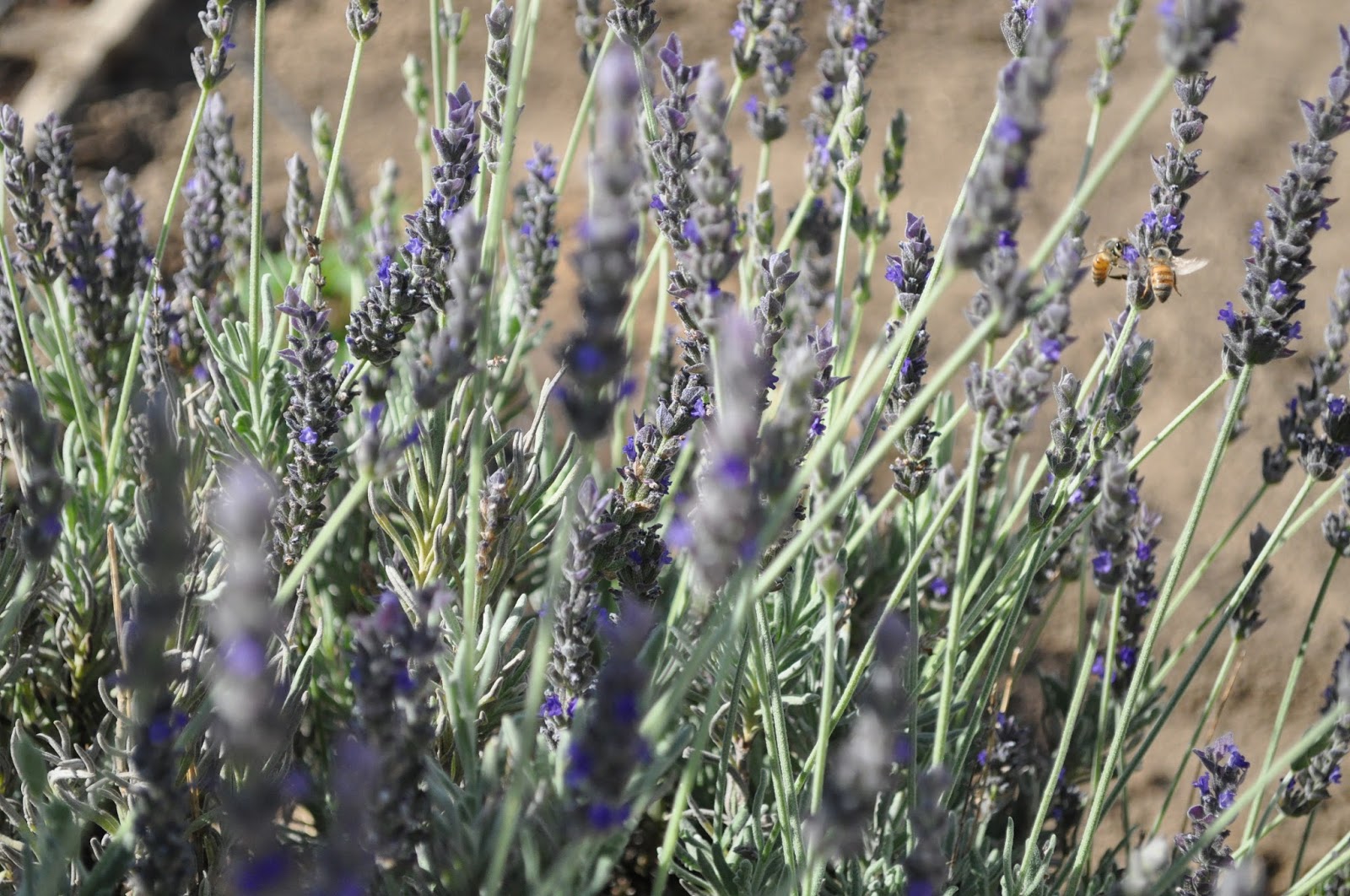
Spanish Lavender


Spring has arrived along with garden tasks to get ready for summer.  Winter crops like broccoli have been cleared to make way for summer favorites like tomatoes and peppers.  The last of the beets and carrots are hanging in there; but Hades heat will force them to fade to make way for more tomatoes.
Weeds have been cleaned away to at least start summer without weeds.  When July gets here, I really don't give a flying floo hoo if there are weeds.  It will be too danged hot.   For now digging, raking, hoeing, planting, pruning, composting, repairing, fertilizing, irrigating, and tidying are generally pretty enjoyable.

Calibrachoa

My current quest is to find some durable purple blooming plants to accent the garden.  Lavender is always a strong choice.  Purple Prince Zinnias have been proven winners.  Monrovia has a compact salvia called Marcus Meadow Sage that I'm thinking of ordering through a local nursery.  Calibrachoa has worked great in the past and is now hanging in several baskets in the garden to entice pollinators throughout the summer.

Hope you're enjoying all of your garden chores.


Sunday, February 12, 2017

Wet California Winter


Santa Rosa Plum Bud Break - February 12, 2017
It's been a beautifully wet winter in California.  Some moan and whine.  I delight in the rare, rich rain.  Dormant spraying failed this winter as opportunities conflicted with rain events.  Today, fruit buds are swelling with the leader of the pack, Santa Rosa, breaking today.  The buds are plentiful; so when the winds come - and they will come- there should still be enough strong fruit to develop and enjoy in June.

Cherry tomato from the 2016 season.
Cherry tomatoes from the 2016 season continue to produce.  Even though the quality isn't premium like in mid summer; there are still cherry tomatoes on the sheltered side of a plant.  They can be smashed up with some peppers that are still hanging on for some fresh salsa.  It's time to pull the thing out and make way for a bed of beets.

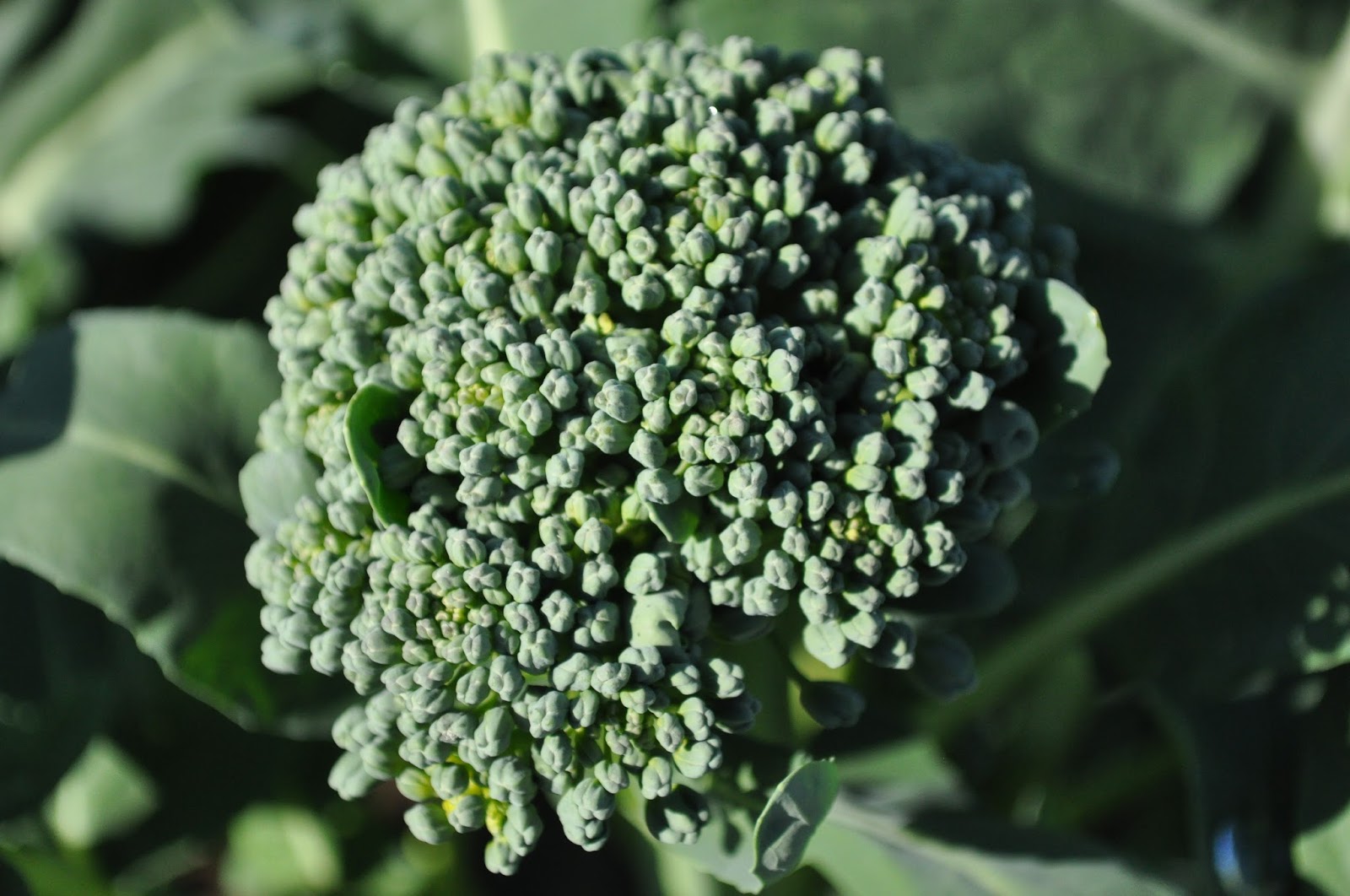
Waltham 29 Broccoli
Broccoli was planted in late summer from seed.  I simply threw the seeds out and walked away.  Remarkably, every single seed germinated providing an abundance of produce.  It's already starting to bolt.  The cauliflower started with such promise; but the rain spoiled it.  Only enjoyed one head of cauliflower.  Sad!

Iceberg Rose
Little to no maintenance has been preformed on the roses yet this year.  They should have been pruned and sprayed by now; but, again, weather has re-directed garden efforts to thumbing through seed catalogs indoors.  When the sun does shine, weeds grow to Jack and the Beanstalk size.  No lie.  This afternoon, Ajax and I tackled weeds.  Tomorrow morning may erase all our efforts.

Regardless of this wonderful bounty of winter rain, I must ask Californians to continue to conserve water.  Get used to it.  It's a way of life.  This bounty is going towards replacing the debt from the drought years.  Thanks for doing your part.

Sunday, September 18, 2016

Lavender Life is Hope for Fall

Lavandula angustifolia "Hidcote Blue"
Lavender does fairly well here in the Central San Joaquin Valley of California.  However, like most of us, its production ceases when the weather gets mega hot. During production, stems can be cut for drying.  I use twine to tie a bouquet then wrap it in newspaper to protect it from dust and bugs.  Then, the package is hung up-side-down in a dry location like the shed until the bouquets are stiff and dry. The dried lavender can then be used in floral arrangements, potpourri for sachets, cooking (herbes de provence or alone) or flea repellent.

Once an arrangement has ended its usefulness as an arrangement, crush that dude to pieces and save in a paper bag.  Sprinkle some of that on carpets before vacuuming.  The carpet is freshened and so is the vacuum bag/canister.  Rub it on your pet before brushing.  The oils smell great to us while the fleas are disgusted.

Now that the heat is on it's way out (hopefully), it is a good time to give lavender a haircut.  Prune off all dead/spent twigs.  Check soil and irrigation.  Spray the plant with a blast from the hose to shake off the summer dust.  I only feed lavender infrequently and when I do it's minimal but organic.  Any lavender that didn't make it through the summer, pitch it in the compost heap and replace. 

I've tried propagating lavender by layering and with seeds.  Buying a new, healthy plant from the nursery is easier and gives instant gratification.  Plus, you're able to see the blossom and determine if it's the right fit for your needs.

Monday, September 5, 2016

It's a Pear!

Warren Pear
The miniature espalier orchard was planted in the winter of 2008-2009 and has never produced any fruit.  Not even a blossom developed eight Spring seasons to follow.  The tree is the handsomest tree in the espalier line.  Beautiful bark, nice form, and dancing leaves have kept Warren for the ax all this time.  In this part of the garden, production is a must.  Warren must have read my mind as I considered removing the tree and replacing with something that isn't a moocher.

I spoke with a Dave Wilson Nursery representative that encouraged me to be patient.  The tree  can take as long as seven years to produce.  The calendar and my ultimatum must have been the right combination of stress for old Warren to get its act together.  The drought may also have played a role in generating blossoms this Spring resulting in one pear.  ONE PEAR!  This fruit has been watched almost daily.  Varmints were my biggest concern.  Harvesting the fruit at the right time was my other concern.


The pear was harvested on September 3, 2016.  I feel like a plaque should be erected to commemorate the long awaited success.  A post to Maybelline's Garden will have to do.  The fruit was flavorful with a nice texture.  I'm optimistic that future harvests should wait until after Labor Day.  Perhaps mid September.  The original tree tags from Dave Wilson Nursery did not list suggested harvest dates.  Here's what the original labels state:

WARREN PEAR   Excellent quality dessert pear - and highly resistant to fireblight.  Medium to large, long-necked fruit with pale green skin, sometimes blushed red.  Smooth flesh (no grit cells) is juicy and buttery with superb flavor. Good keeper.  Cold hardy to -20°F.  From Mississippi.  600 hours.  Self-fruitful.

OHXF 333 ROOTSTOCK  European and Asian pears on OHxF 333 are dwarfed to about 2/3 the size of standard, or about 12-18 ft. if not pruned.  Widely adapted, diseased-resistant.  Trees on OHxF 333 may be held to any desired height by summer pruning.

The last fruit tree awaiting harvest is the Granny Smith apple.

Sunday, September 4, 2016

Oh Henry!


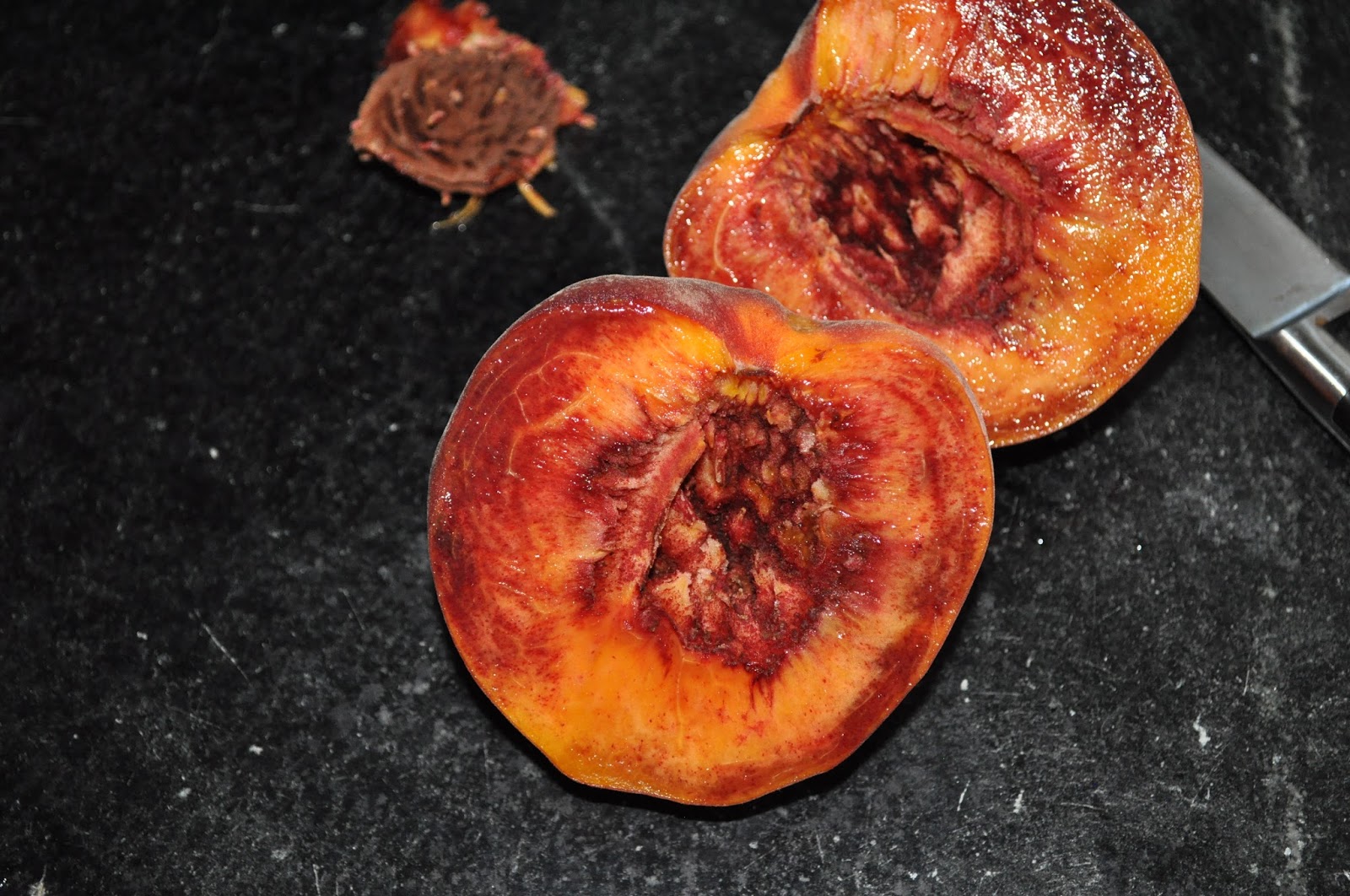
O'Henry peach performed exceptionally this year.  The freezer is well stocked with loads of peach slices to enjoy in pies and cobblers during cooler months to remind us of the hellish summer we endured ending with this reward.  Dave Wilson Nursery  provides this description:

A favorite fresh market yellow freestone - renowned for its firm texture, rich flavor and consistently high quality.  Large fruit ripen about two weeks after Elberta.  Skin mostly red, yellow flesh heavily streaked with red when fully ripe.  Strong, vigorous, heavy bearing tree.  Large, showy pink blossoms.  Highly recommended for home orchards. 

For easy care and harvest the tree may be kept under 10 feet high by summer pruning.

Winter chilling requirement:  Bout 700 hours below 45 degrees.  Self-fruitful.

Originated in Red Bluff, California.  Introduced in 1968.

Dates for harvest seasons vary with climate and year.  Dates are approximate for Modesto, CA. 
8-10 to 9-5. 

For my garden in Bakersfield, CA., the harvest dates are about the same.


Sadly, O'Henry looks to have borers.  Local nursery specialists advise that it is terminal; but there should be many years of peach production ahead.


Sunday, February 14, 2016

Bud Break - Santa Rosa Plum

The buds on the Santa Rosa plum are the first to break this spring (Feb 13, 2016). It is loaded with buds. All the other fruit trees are loaded too - peach, apple, nectarine, and apricot - but the pear tree looks to have another bloomless year.  Diva.


Sunday, August 30, 2015

Come On Fall!

Today, the morning air was refreshingly cool.  Excellent. October is on the way.  The tomatoes have been removed along with the morning glories.  The raised beds have been tilled (with my new Earthwise electric tiller) and are being prepared to be planted with seeds for the winter garden.  Some of the seeds used are leftover from 2014.  So what.  If weed seeds have no expiration date, these seeds better perform too.

The beet bed is now ready for Farmer MacGregor to roll out the drip lines.  Here's what was planted today.


More beet seeds will be sown in the coming weeks to insure beet harvest throughout the winter.  Delicious.

Friday, June 5, 2015

Garden Progress During a Drought.

What the heck?!  Blogging sure has dwindled down to a small trickle just like the flow of the good ol' Kern River.  Even though the drought is taking its toll, production in the garden continues.  Here's what's going on:

Dwarf sunflowers track with the sun and are enjoyed by pollinators.  I doubt that I'll harvest and roast the seeds.  These flowers are used to attract pollinators, provide some short shade, and brighten the garden.  Only about half of the seeds planted germinated.  I'll blame it on the source.  Maybe I'll save a head of these seeds to plant later.

Santa Rosa plums were not abundant this summer; but there were more than last summer and so very delicious.  There weren't enough to meet the demands of munching in the garden and jelly.  Munching wins everytime.

Thornless boysenberries  were productive enough to freeze some to enjoy later and fulfill the garden munchies.  Ice cream?  Cobbler?  Delicious.

Blenheim apricots produced just like the berries.  Some in the freezer and some in my belly.  These are my favorite and are evidence that there is a God.  Dang it, they taste just like summer.

Here's a variety of cantaloupes I've never tried before.  The seed package describes the taste as similar to pineapple.  We'll see.  Moon and Stars watermelons are also planted in the garden.  They aren't expected to be harvested until late summer.

 String beans are vigorous where a failed thornless boysenberry once dwelled.  I'm not a fan of green beans; but Farmer MacGregor enjoys them.  Surplus beans will be housed in the freezer for MacGregor and a garden gnome to enjoy during the winter.

Lavender is drawing the the honey bees too.  I've never used it to cook (except for Herbs de Provance); so I might give it a try.  Ice cream?  Creme Brulee?

Granny Smith apples look to be having a banner year.  This little tree that I thought was going to die from scald has made a great comeback.  Since I eat an apple each night, I don't think these will be used for anything other than munching.

Red Flame grapes are coming along; but there are some problems with some bunches and leaves that the local farmers' cooperative extension need to be consulted about.  At least, it's providing great shade and shelter for the scrub jay family nesting on the arbor.

As for the drought, I have very strong opinions that I'll save for another time.


___________________________________________________________________________________


Afterthought:  I forgot to list the biggest resident in the garden this summer - tomatoes!  Here's the variety, the amount, and where they came from:

Better Boy (6 plants from Floyd's) -  These are planted in a bed that has been solarized to kill root knot nematodes.  4 out of 6 plants are thriving.  As the temperatures have increased, the plants are looking healthier.

Big Beef (1 plant from the Tomato Lady at the Haggin Oaks Farmers Market) - The Tomato Lady needed to reduce her inventory; so a dollar bill won a healthy plant to try out.

Champion (6 plants from Floyd's) - These are living up to their name.  All the plants are growing vigorously with many blossoms and tomatoes (non ripe yet).
 
Gold Currant (1 plant from a bird pooping at the front step) - Several years ago, a co-worker gave me an heirloom plant she started from seed.  The thing would never die; so Farmer MacGregor had to yank it out during the winter.  Each year, it sprouts somewhere in the garden.  The current Gold Currant sprouted last year at the front step and thrived through our mild winter.  It grows a top hedges (see header photo) for about 8 feet and has been producing grape tomatoes the entire time.  It's a keeper.

Super Sweet 100 (1plant from Walmart) - What the heck.  These were out on a rack at the entrance to the dreaded Walmart; so I made the trip a little bit more enjoyable by picking up a tomato plant.  We'll see.


Saturday, March 14, 2015

Whew!


Soaking the garden dirt off the fresh carrots and beets that were harvested this morning.  Everything was hosed off; but there's some left behind.  The water will be dumped on an azalea.

Carrots will be blanched and frozen with some reserved for Farmer MacGregor's corned beef.  The beets will be pickled and set up in jars. There's still more out in the garden yet to be harvested.

Two beds are ready for tomatoes. I'll need to hit the sidewalk sale at Floyd's and get started tomorrow.  Summer is here.

UPDATE:  Looky here what I found in my haul of carrots.  Hope this puts a smile on your face. If it doesn't, go out and pull some weeds.


Thursday, March 12, 2015

Wisteria. Wowzer!


Wow! Wisteria is loaded up on the pergola with soft purple petals falling like sweet scented confetti. That perfume blended with all the citrus (grapefruit, orange, lemon, & manderin) and sweet alyssum is fabulous. It makes the transition from nice, cool weather into steamy armpit weather just a bit more tolerable - for now anyway.

Last weekend all the trees and berries were fertilized and the broccoli and cauliflower were pulled.

This weekend's tasks: 
Harvest more beets (pickled) and carrots (frozen) to store for later.
Prepare some beds for summer crops.
Plant tomatoes IF I can make it that far.

Sunday, March 8, 2015

Meditative Roots

Out in the garden this morning before it gets too hot.  Gardening is my meditation - similar to swimming laps. My mind has no specific focus but my body is on auto pilot to get the task done (kinda). I'm unplugged (kinda), with the exception of my iPad, speaker (70s radio from Rhapsody this morning).  


While the weather is somewhat tolerable (70s - like my taste in music this morning) I need to get the beds ready for summer. That means pulling the spent broccoli/cauliflower bed.  Most of the plants have bolted producing yellow blossoms the bees are loving. The bees will have plenty of other pollen in the garden - citrus, stone fruits, apples, wisteria, and danged old dandelions.


Pulling that bed revealed strong, healthy roots with no signs of damage from nematodes.  Good. This bed was solarized last summer. So far, that process looks successful OR the buggers just don't like broccoli like George H. W.

Speaking of roots, my current time soaker is genealogy.  It's most interesting, but there should be intervention for this jig saw puzzle like quest. One of my garden gnomes and I recently travelled to a genealogical conference in Salt Lake City.  Wow. There is a huge community of geneaddicts (I just made up that word. Don't bother to look it up. Yet.). 

My break has lasted long enough. Time to meditate some more.